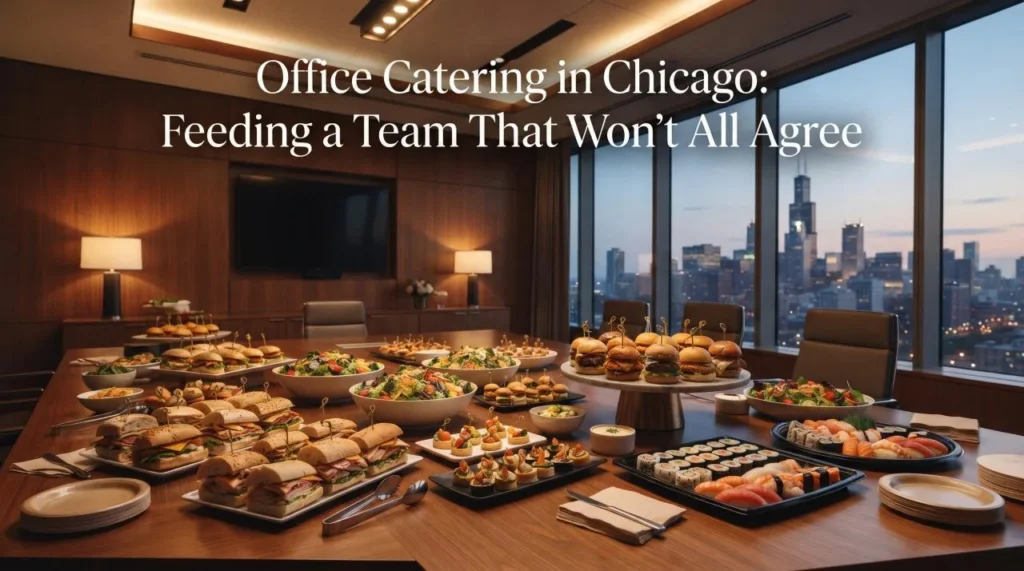
Feeding an office full of people sounds simple until it is time to place the order. One employee wants a salad, another is looking for something filling, someone else avoids dairy, and a few people would rather skip sandwiches altogether. Add vegetarian preferences, food allergies, different budgets, and a meeting that cannot run late, and ordering lunch for a team becomes more complicated than expected.
Office catering is about more than bringing enough food to the conference room. A successful meal accommodates different preferences, arrives at the right time, and allows everyone to eat without creating extra work for the person organizing it. In a city as large and diverse as Chicago, businesses have plenty of cuisines and catering formats to consider, but having more options does not automatically make the decision easier.
The key is to create a system that makes group meals predictable without making them boring. By understanding what employees need, choosing flexible menus, and planning logistics ahead of time, office managers can make workplace catering a straightforward part of the workday.
Why Feeding an Office Team Is More Complicated Than It Looks
A workplace lunch rarely involves a group of people with identical tastes. Even a small department can include employees with different dietary requirements, cultural food preferences, appetites, and opinions about what makes a satisfying meal.
Some employees may prefer lighter options because they have afternoon meetings. Others want a substantial lunch that keeps them satisfied until the end of the day. Vegetarian and vegan employees need more than a side salad, while people with food allergies need reliable information about ingredients and preparation practices.
There is also the question of familiarity. A team that regularly orders pizza may appreciate trying Mediterranean bowls, tacos, or Asian-inspired dishes. However, introducing an unfamiliar cuisine to an entire office can be risky if the menu offers few alternatives.
The solution is not to find one restaurant that perfectly matches everyone’s preferences. That is rarely possible. Instead, organizers should look for menus that offer variety, provide meaningful choices, and allow people to assemble meals according to their needs.
A useful approach is to think about catering as a shared experience with individual flexibility. Everyone receives lunch at the same time, but nobody has to eat exactly the same thing.
Start With a Quick Employee Preference Check
Before browsing menus, find out what the team actually wants. This step can prevent wasted food, last-minute changes, and the frustration of ordering a meal that several employees cannot eat.
A short survey is often enough. Ask employees to identify their dietary requirements, flag allergies, and select a few preferred cuisines. If the office orders lunch regularly, keep the survey simple enough to repeat without inconveniencing everyone.
Useful questions include:
- Do you have any dietary restrictions or food allergies?
- Would you prefer an individual meal or a shared buffet?
- Which cuisines would you enjoy for an office lunch?
- Are there ingredients you avoid, such as dairy, gluten, or certain meats?
- Would you prefer a lighter lunch or a more substantial meal?
Avoid turning the survey into a complicated questionnaire. The goal is to identify important requirements and broad preferences, not to collect every employee’s opinion on every possible dish.
It is also helpful to distinguish between preferences and non-negotiable dietary needs. Someone who dislikes onions may be able to select another dish, while someone with a serious allergy may need specific preparation procedures and ingredient confirmation.
Keep the results available for future orders. A simple shared document that records dietary needs and popular cuisines can save time every time the office organizes a meal.
Choose a Menu With Options, Not Just Variety
A menu can contain twenty dishes and still be difficult for a mixed group to navigate. What matters is whether those dishes provide genuinely different choices.
For example, a catering spread featuring several types of fried chicken may technically offer variety, but it does little for employees who do not eat meat or prefer lighter meals. A more balanced menu might include a protein-based main dish, a vegetarian alternative, a substantial salad, vegetables, and a selection of sides.
The most useful menus allow people to customize their plates. Build-your-own bowls, taco bars, Mediterranean spreads, and sandwich stations can work particularly well because guests can select ingredients according to their preferences.
When considering office catering chicago businesses should prioritize menus that combine familiar favorites with flexible alternatives. This makes it easier to accommodate a team with different tastes while keeping the ordering process manageable.
Build-Your-Own Bowls
Grain bowls can be a practical choice for offices because their components are easy to separate. A catering order might include rice, quinoa, roasted vegetables, grilled chicken, beans, greens, and several sauces.
Employees can choose the ingredients they want rather than accepting a fixed combination. Organizers can also request that dressings and sauces arrive separately, giving people more control over their meals.
Bowls work well for lunches where employees need something filling but do not want a traditional heavy meal. They can also be adapted to vegetarian or vegan preferences when the caterer offers appropriate proteins and clearly identifies ingredients.
Taco and Fajita Bars
Taco bars provide another flexible format. Tortillas, seasoned proteins, beans, vegetables, salsa, and toppings can be arranged separately so employees can build their own meals.
This format is particularly useful when the team includes people who eat different types of protein or prefer different levels of spice. Vegetarian fillings should be substantial enough to function as a complete meal rather than an afterthought.
Be mindful of shared utensils and ingredient placement, especially when the spread contains common allergens. Ask the caterer how items will be labeled and whether ingredients can be kept separate during preparation and delivery.
Mediterranean Spreads
Mediterranean catering often combines grilled proteins, hummus, salads, grains, vegetables, and pita. These components can offer a balance of fresh and filling options.
The format may suit teams that want several flavors without ordering entirely separate meals. However, organizers should check for ingredients that may be unsuitable for particular employees, including dairy, sesame, and gluten.
Sandwiches With Meaningful Alternatives
Sandwich platters remain popular because they are familiar, easy to distribute, and convenient for meetings. They can be a sensible choice for a shorter lunch break or a gathering where people will continue working.
The main drawback is that standard platters may not provide enough options for everyone. Include vegetarian sandwiches, consider gluten-free alternatives where feasible, and provide salads or other substantial sides. Label each sandwich clearly so employees do not have to inspect every item to find something suitable.
Accommodate Dietary Restrictions Without Making It Awkward
Dietary accommodations should be part of the initial planning process rather than something added after the main order is placed.
Start by asking employees to share relevant requirements privately if they prefer. Nobody should have to explain a medical condition or personal dietary choice in front of the entire team just to receive an appropriate lunch.
Next, communicate those needs directly to the caterer. Do not assume that a dish is suitable simply because its name sounds vegetarian, dairy-free, or gluten-free. Sauces, marinades, cooking oils, and preparation surfaces can affect whether a meal meets a particular requirement.
For serious allergies, confirm the caterer’s ability to manage the specific risk. Ingredient labels alone may not be sufficient when cross-contact during preparation is a concern. If a caterer cannot reliably accommodate a severe allergy, discuss safe alternatives with the affected employee rather than making assumptions.
Separate packaging can make distribution easier. Individual meals with clear labels reduce confusion and help employees identify their orders quickly. For buffet-style catering, request ingredient cards and separate serving utensils where appropriate.
The objective is to make everyone feel considered without turning lunch into a complicated administrative exercise. A little preparation can help employees enjoy the meal with confidence.
Decide Between Individual Meals and Shared Catering
The best catering format depends on the purpose of the gathering, the size of the team, and how much flexibility employees need.
Individual boxed meals offer clear portions and make it easier to identify which meal belongs to each person. They can be particularly useful for training sessions, presentations, client meetings, and occasions when employees need to return to work quickly.
Shared platters and buffet arrangements create a more social atmosphere. They allow people to sample different dishes and choose their own portions, which can be useful for celebrations or longer team lunches.
There are trade-offs to consider. Individual meals may generate more packaging and require accurate headcounts before ordering. Buffets can produce more leftover food and need additional space, serving utensils, and time for setup.
A hybrid format often works well. Order individual meals for employees with specific requirements while providing shared sides, desserts, or snacks for the rest of the team. This approach offers flexibility without requiring every item to be individually customized.
When choosing a format, consider how people will eat. If the meeting takes place in a small conference room, a buffet may be inconvenient. If employees are gathering in a large break area, shared platters may be easy to manage.
Plan the Budget Before Comparing Restaurants
Catering costs can increase quickly when delivery, service charges, disposable supplies, and additional menu items are included. Establishing a realistic budget before selecting a restaurant helps keep the decision focused.
Begin with the amount available per person. Then estimate the total cost using the expected headcount, remembering that some employees may need different meals.
The lowest menu price does not always represent the best value. A basic meal may require additional sides to feel complete, while a slightly more expensive package may include drinks, utensils, and a broader selection of food.
Compare quotes using the same criteria. Ask whether the listed price includes delivery, taxes, packaging, setup, and any applicable service fees. Confirm whether there are minimum order amounts or additional charges for deliveries to particular buildings.
It is also worth considering how the food will be portioned. A catering package with generous servings may provide better value for a team of hungry employees, while a lighter menu may be appropriate for a short afternoon meeting.
Avoid ordering excessive quantities simply because the group has different preferences. A balanced menu with several well-chosen options is usually more effective than purchasing large amounts of every available dish.
Account for Chicago’s Delivery and Building Logistics
Even an excellent menu can disappoint if it arrives late or creates confusion at the office entrance. Chicago’s traffic, weather, parking restrictions, and building access procedures can all affect delivery planning.
Start by confirming the delivery address, including the correct building entrance, floor, suite, and any instructions the driver needs. Large office buildings may have designated loading areas, security desks, or rules about deliveries during certain hours.
If the office is in a busy downtown location, check whether the driver can park nearby and whether someone needs to meet the delivery at street level. Do not assume a driver can bring everything directly to the conference room.
Schedule delivery with enough time for setup before employees are ready to eat. For a meeting beginning at noon, for example, the catering should arrive early enough to allow for unpacking, arranging the food, checking labels, and resolving missing items.
For important meetings, discuss a delivery window with the caterer rather than relying on an exact last-minute arrival. Keep the organizer’s contact information available and identify someone who can receive the order if the main coordinator becomes occupied.
Weather also deserves consideration. During winter, snow and icy conditions can affect travel times. During busy periods, local restaurants may experience higher demand. Ordering early and confirming the details shortly before the event can reduce avoidable surprises.
Make Ordering Easier With a Repeatable System
Companies that order catering regularly should not have to start from scratch every time. A repeatable process can reduce administrative work and make the quality of office lunches more consistent.
Create a simple record of previous orders, including the restaurant, menu, number of people served, total cost, delivery experience, and employee feedback.
After each meal, ask one or two practical questions. Was there enough food? Were the vegetarian options satisfying? Did the delivery arrive on time? Were the portions appropriate? This feedback is more useful than collecting general comments without a clear purpose.
Maintain a shortlist of reliable caterers across different cuisines. One restaurant might be ideal for boxed lunches, another for Mediterranean buffets, and another for celebrations. Having alternatives also helps when a preferred restaurant is unavailable.
For recurring meetings, consider rotating cuisines. A predictable schedule can introduce variety without requiring the team to make a completely new decision each week. For example, the office might alternate between bowls, sandwiches, Mexican food, and Mediterranean dishes.
It is equally important to keep dietary information current. Employees join, leave, and change their preferences over time. Review the information periodically and confirm important requirements before placing a new order.
A consistent process gives organizers more time to focus on the purpose of the meeting rather than managing every detail of lunch.
Reduce Food Waste Without Leaving People Hungry
Ordering the right amount of food requires a balance between generosity and practicality. Too little food can leave employees disappointed, while too much creates unnecessary expense and waste.
Use the confirmed headcount as your starting point, then account for the type of meal and the duration of the event. A full lunch during a long workshop may require more substantial portions than light refreshments during a short meeting.
Choose menus with components that can be stored or reused safely when appropriate. Whole fruit, individually packaged snacks, and certain unopened items may be easier to distribute after the event than delicate dishes that deteriorate quickly.
Make sure there is a clear plan for leftovers. Employees may be able to take extra portions home, or suitable food may be stored according to food safety guidance. Perishable items should not be left at room temperature for extended periods simply because the meeting has ended.
Buffets should also be arranged thoughtfully. Start with realistic quantities and replenish items when possible, rather than putting all the food out at once. This can help maintain food quality while reducing the chance of large amounts being discarded.
Most importantly, do not reduce portions so aggressively that employees are left hungry. The goal is to order responsibly while still providing a satisfying meal.
Create a Better Lunch Experience for the Whole Team
Office catering can contribute to workplace culture when it makes employees feel included and gives them an opportunity to step away from their usual routines. However, the experience should not depend entirely on the food itself.
Consider the timing of the meal. If employees have a short break, choose items that are easy to serve and eat. If the purpose is team building, allow enough time for people to sit together rather than expecting everyone to finish quickly and return to their desks.
Provide enough space for employees to collect food without creating a long queue. Make plates, napkins, utensils, drinks, and waste bins easy to find. If the office has a shared dining area, arrange the food so that people can move through it comfortably.
Communication also matters. Tell employees when lunch will arrive, where it will be served, and whether they need to collect an individually labeled meal. Clear instructions prevent confusion and make the event feel organized.
Finally, avoid assuming that every employee wants to participate in the same way. Some may prefer to socialize, while others may want a quiet lunch. A good setup allows people to enjoy the food without forcing a particular style of interaction.
FAQs
How much food should I order for an office lunch?
Start with the confirmed number of attendees and the caterer’s recommended portions. Consider the length of the event, the type of food, and whether the menu includes substantial sides. For mixed groups, variety and adequate portions are more useful than ordering excessive quantities of a single dish.
What type of catering works best for employees with different dietary needs?
Customizable menus, such as grain bowls, taco bars, and Mediterranean spreads, often work well because employees can select individual components. However, organizers should verify ingredients, labeling, and preparation practices when allergies or strict dietary requirements are involved.
Should I choose boxed lunches or a buffet?
Boxed lunches are convenient for meetings with limited time, individual dietary requirements, or restricted space. Buffets are often better for informal gatherings where employees can choose their own portions. A hybrid approach can combine individual meals with shared sides.
How far in advance should I place an office catering order in Chicago?
For a routine weekday lunch, ordering several days ahead is a sensible starting point, although the ideal lead time depends on the restaurant, group size, and menu. Large events, customized meals, and busy dates may require more notice. Confirm delivery instructions and the final headcount before the event.
How can I keep office catering within budget?
Set a per-person budget, compare complete quotes, and account for delivery fees, taxes, packaging, and other charges. Select a balanced menu rather than adding unnecessary extras, and use employee feedback to identify which items are worth ordering again.
What should I do if an employee has a serious food allergy?
Ask the employee what accommodations are necessary, then contact the caterer to discuss ingredients, preparation procedures, and cross-contact risks. Do not assume that a meal is safe based solely on its label. If the caterer cannot meet the requirement reliably, work with the employee to find an appropriate alternative.
Conclusion
Feeding an office team that does not agree on lunch does not have to become a weekly challenge. The most effective approach combines employee feedback, flexible menu choices, clear dietary accommodations, realistic budgeting, and careful delivery planning.
Chicago businesses have access to a wide range of cuisines and catering formats, making it possible to provide meals that suit different tastes without placing an unreasonable burden on the organizer. The key is to focus on practical choices that make everyone feel considered.
By maintaining a list of reliable caterers, learning from previous orders, and establishing a consistent process, businesses can turn office lunch into a smooth and enjoyable part of the workday. When the food arrives on time, the options are clear, and employees can find something they genuinely want to eat, everyone benefits.