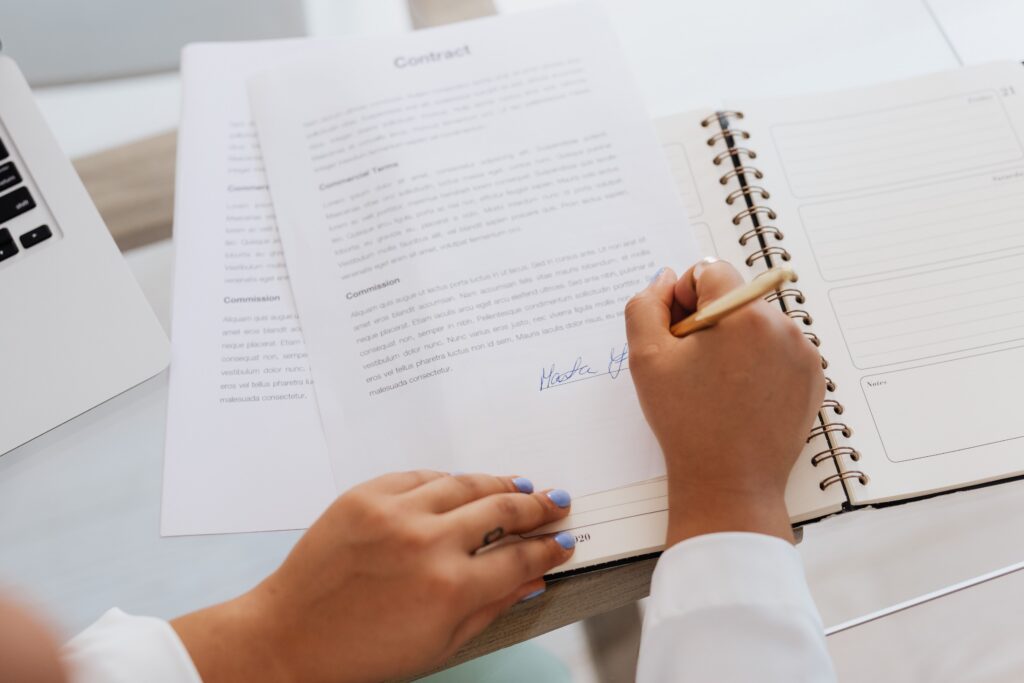
Vet a patent licensing partner by asking four things before you sign anything: who owns the work product, how they get paid, what happens if nothing licenses, and whether they will name past projects you can verify. A firm that answers all four plainly is worth a longer look. A firm that dodges any of them tells you what you need to know.
Inventors lose more money to the wrong partner than to the wrong idea. The licensing field carries real cost, and the U.S. Federal Trade Commission has brought enforcement actions against invention-promotion operations that charged large upfront fees while delivering little. The lesson is not to avoid paid help. It is to check the help before you pay.
Who owns what you paid for
The first question is ownership. When a firm produces renderings, a CAD model, or a pitch package for you, that work product should be yours to keep and use, whether or not a license ever closes. Ask directly. Get the answer in writing. A partner that treats deliverables as hostage to a future deal has misaligned incentives from day one.
Ownership also touches confidentiality. A routine non-disclosure agreement before the first technical conversation is normal practice, and a serious firm will offer one without being pushed. The U.S. Patent and Trademark Office explains the basics of patent rights and what protection actually covers on its patent basics pages, and reading that first helps you tell a real answer from a vague one.
How the partner gets paid
There are two honest models, and a partner should tell you which one applies to each service.
Design fees for concrete work
Upfront fees are legitimate when they buy something tangible. Industrial design, engineering, photorealistic renderings, and a pitch package are real work product with real cost. The distinction the FTC draws is between paying for deliverables you can hold and paying to have someone “shop” an idea with nothing produced. Ask what the fee buys, line by line, and confirm the deliverable exists before the next payment.
Contingency for representation
Licensing representation is commonly contingency-based, with no upfront fee, so the firm earns only when a deal earns. That structure aligns the partner with your outcome. If a firm wants a large upfront payment purely to pitch your concept to manufacturers, slow down and ask why.
What happens when nothing licenses
Most concepts do not close a license, and a straight partner says so. Ask what you walk away with if no deal materializes. The good answer is your work product, your filings, and a clear picture of why the market responded the way it did. Be wary of any promise about royalties, sale prices, or income. No one can guarantee that a patent will issue, that a license will close, or that a product will sell. A partner who implies otherwise is selling the promise, not the process.
The Small Business Administration keeps free, neutral guidance on evaluating business services and funding, and its resources are a useful sanity check against any pitch that leans on urgency or guaranteed results.
Can they name real projects
Reputation is checkable. Ask for specific past work you can look at, and for the names behind the firm. University technology transfer offices, which license inventions for a living, publish their processes openly. Stanford’s Office of Technology Licensing describes how it evaluates and moves inventions on its public site, and that transparency is the standard to expect. A partner that cannot point to anything concrete, or that hides who does the work, has given you an answer.
Integrated versus stitched together
One structural question shapes cost and friction: does the partner keep design, engineering, marketing, and licensing under one roof, or will you coordinate separate freelancers yourself? An integrated firm reduces handoffs and keeps one team accountable for the whole path. Enhance Innovations, founded in 2010 and based in Champlin, Minnesota, runs that integrated model with a virtual-first approach, producing renderings, CAD, and animation digitally rather than treating a physical prototype as a required first step. The point is not the name. It is that you should know, before you sign, whether one team owns the outcome or whether you become the project manager by default.
A short vetting script
Bring these to any first call. Does my work product stay mine regardless of outcome? What exactly does each fee buy, and when is it due? Is representation contingency-based? What do I keep if nothing licenses? Can you name projects and people I can verify? Will you sign an NDA before we talk specifics? If the answers are clear and consistent, you have a partner worth vetting further. Working through the full set of questions that separate a real licensing partner from a sales funnel before your first payment is the cheapest protection you will ever buy.
This article is educational and is not legal or financial advice. Do your own research and confirm any firm’s terms in writing before you commit.