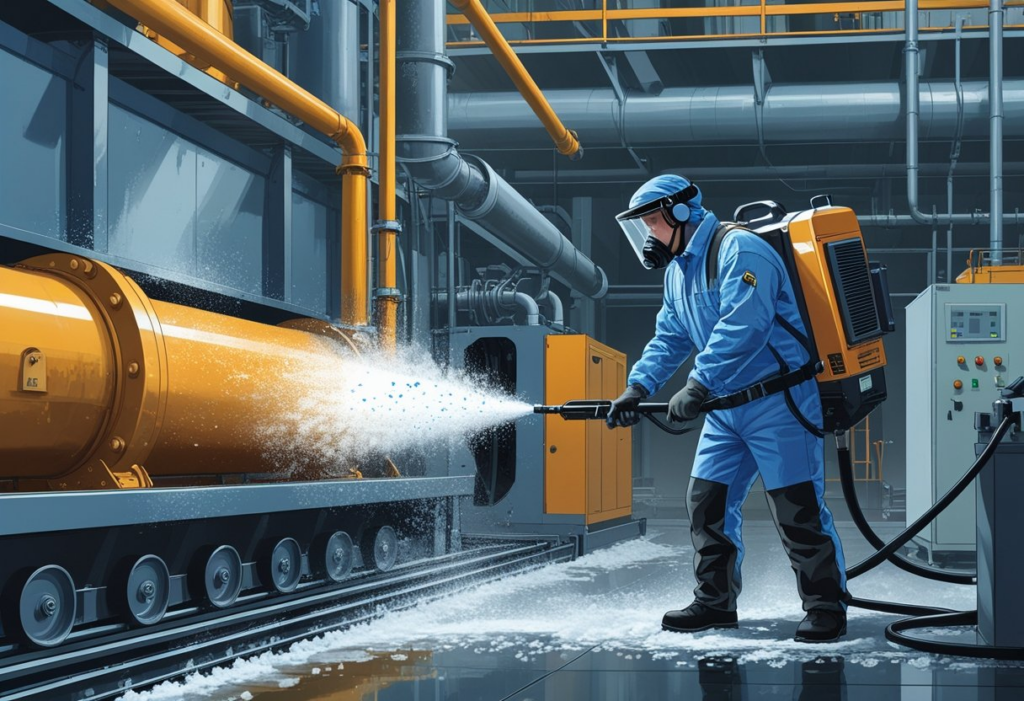
Maintaining Chemical Pipelines and Boilers Safely

Industrial facilities face ongoing challenges from residue buildup inside pipelines and boilers, where contamination can reduce efficiency, increase downtime, and compromise sensitive internal surfaces. Traditional cleaning methods—such as abrasive blasting, water-based systems, or chemical treatments—often introduce additional risks, including surface damage or secondary waste. As an alternative, dry ice pipeline cleaning has emerged as a precise, non-abrasive solution for maintaining critical infrastructure. Nu-Ice Blasting develops advanced dry ice blasting equipment designed to remove buildup without friction or moisture, supporting safer and more effective chemical machinery maintenance while helping extend the operational lifespan of valuable industrial systems.

Dry ice blasting is an industrial cleaning method that uses solid carbon dioxide (CO₂) pellets accelerated by compressed air to remove contaminants from equipment surfaces. The process involves directing these pellets at high speed through a nozzle, where they impact buildup without the use of water or harsh chemicals. Upon contact, the dry ice pellets sublimate—transitioning directly from solid to gas—leaving no secondary residue behind. This eliminates the need for additional cleanup associated with traditional methods. As a result, dry ice blasting provides a controlled, non-abrasive approach suitable for maintaining sensitive industrial systems while minimizing operational disruption.

Kinetic Impact
Dry ice pellets are propelled at high velocity using compressed air, creating a mechanical impact that helps dislodge surface contaminants from equipment.

Thermal Shock
The extremely low temperature of dry ice introduces a rapid cooling effect when it contacts warmer surfaces. This temperature difference can weaken the bond between contaminants and the substrate.

Sublimation Expansion
When dry ice pellets sublimate upon impact, they expand into gas. This rapid expansion assists in lifting and separating contaminants from surfaces without leaving residue, supporting efficient and controlled cleaning.

A dry ice blasting machine consists of several key components that work together to deliver consistent cleaning performance. The air compressor supplies the necessary compressed air to accelerate dry ice pellets through the system. The dry ice hopper stores and feeds the pellets into the machine during operation. A metering system regulates the amount of dry ice introduced into the airflow, allowing for controlled cleaning intensity. The hose and nozzle direct the high-velocity stream toward the target surface, enabling precise application. Together, these components form an integrated system designed for efficient and non-abrasive industrial cleaning.

Nu-Ice Blasting is a U.S.-based manufacturer of dry ice blasting equipment, producing systems designed for industrial cleaning applications. The company focuses on engineering equipment that supports non-abrasive, dry cleaning processes across various industries, including those requiring careful chemical machinery maintenance. Its machines are designed and manufactured in the United States, emphasizing consistent build quality and operational reliability. Nu-Ice Blasting™ equipment utilizes compressed air and dry ice pellets to remove buildup without introducing moisture or secondary waste. This approach aligns with industry needs for maintaining pipelines, boilers, and processing equipment where surface integrity is critical. By providing purpose-built systems, the company contributes to broader adoption of dry ice blasting as a practical alternative to traditional cleaning methods.

Nu-Ice Blasting designs its dry ice blasting systems with functional components that support controlled and consistent operation. The blasting gun serves as the primary interface for directing dry ice pellets toward target surfaces, allowing operators to manage flow and positioning during use. Interchangeable nozzle options are available to accommodate different cleaning requirements, adjusting the spread and intensity of the pellet stream. Systems may also incorporate an integrated moisture separator, which helps remove water from the compressed air supply before it enters the machine. An aftercooler can be used alongside the compressor setup to reduce air temperature and assist in moisture control. Together, these features contribute to stable airflow and consistent pellet delivery during operation.

Nu-Ice dry ice blasting equipment is designed with specifications that support industrial-scale operation. Machine dimensions vary by model but are generally configured to allow mobility within facility environments while maintaining a stable footprint. Equipment weight is balanced to support durability and transportability. Hopper capacity is structured to hold a working volume of dry ice pellets suitable for continuous operation without frequent refilling. Air flow requirements typically fall within standard industrial compressor ranges, while operating pressure is adjustable to align with different cleaning conditions. Dry ice consumption levels depend on the selected settings and application needs, with metering systems regulating pellet usage. These specifications collectively define the operating parameters of the equipment without requiring extensive customization.

Preparation and Setup
Operators begin by connecting the dry ice blasting unit to a compressed air source and loading dry ice pellets into the hopper. System checks are performed to ensure proper airflow and component readiness.

Safety Requirements
Appropriate personal protective equipment is used during operation, including eye and hearing protection. Ventilation is considered to manage carbon dioxide levels in enclosed environments.

Typical Workflow Steps
Once activated, the system meters dry ice pellets into the compressed air stream and delivers them through the hose and nozzle. The operator directs the blasting gun across target surfaces in a controlled manner, adjusting airflow and pellet feed as needed. The process continues until the cleaning cycle is complete, followed by system shutdown and inspection.

Nu-Ice Blasting equipment is used across a range of industrial and commercial environments where controlled, dry cleaning methods are required. In manufacturing and production settings, dry ice blasting systems are applied to maintain equipment, tooling, and processing lines without introducing moisture. In food processing environments, the method is used where sanitation processes benefit from dry, residue-free cleaning approaches.

The technology is also applicable in historical restoration and on delicate surfaces, where non-abrasive interaction is necessary to preserve underlying materials. In sectors such as automotive and aerospace, dry ice blasting equipment is used for cleaning components and assemblies that require precision handling. Electrical and specialty cleaning applications also utilize the method due to its compatibility with sensitive equipment. Across these varied use cases, the equipment supports maintenance activities in environments where traditional cleaning methods may be less suitable.

Dry ice blasting is characterized by a cleaning process that does not generate secondary waste, as dry ice pellets sublimate into gas upon impact. The method involves non-abrasive interaction with surfaces, reducing the risk of mechanical wear during cleaning. It is also a dry, chemical-free process, which eliminates the need for water or added cleaning agents. These characteristics make it applicable in environments where residue control and material compatibility are important. In contexts such as boiler cleaning dry ice, the process aligns with operational needs for maintaining internal systems without introducing additional contaminants. Considerations include proper ventilation to manage carbon dioxide and ensuring suitable compressed air supply for consistent equipment performance.

Nu-Ice Blasting systems can be configured with a range of accessories that support different operational needs. Nozzle and hose options allow operators to adjust pellet flow patterns and reach specific areas within equipment. Air supply integration is essential, often incorporating aftercoolers and moisture separators to help manage compressed air quality. Proper air preparation supports consistent system performance during operation. Storage considerations include maintaining dry ice in insulated containers to reduce sublimation loss, while routine equipment maintenance involves checking hoses, fittings, and connections to ensure reliable functionality over time.

Frequently Asked Questions (FAQs)

How does it compare to abrasive cleaning methods?
Dry ice blasting differs from abrasive methods in that it uses soft pellets that sublimate on impact, rather than hard media that physically wear down surfaces. This results in a different interaction with materials during cleaning.

Does the process produce waste or residue?
The process does not generate secondary waste from the blasting media itself, as dry ice transitions into gas. Any removed contaminants, however, may still need to be collected depending on the application.

What is dry ice blasting equipment used for?
Dry ice blasting equipment is used to remove contaminants from surfaces using solid CO₂ pellets accelerated by compressed air. It is commonly applied in industrial environments where dry, non-abrasive cleaning methods are required.

Can the equipment be used on different types of machinery?
Yes, dry ice blasting systems are designed for compatibility across a wide range of machinery, including production equipment, electrical components, and processing systems, depending on operational setup and accessibility.

What safety measures are typically required during operation?
Operators generally use protective gear such as gloves, eye protection, and hearing protection. Adequate ventilation is also important to manage carbon dioxide levels in enclosed or confined workspaces.

What infrastructure is needed to operate the equipment?
A reliable compressed air source is required, along with access to dry ice pellets. Facilities should also consider ventilation and space for equipment setup and movement during operation.

Is dry ice blasting environmentally considerate?
Dry ice blasting uses recycled carbon dioxide and does not involve additional chemicals. Its dry process and lack of secondary blasting media contribute to simplified cleanup and reduced disposal considerations.

Nu-Ice Blasting continues to develop dry ice blasting systems that align with the operational needs of modern industrial environments. By focusing on equipment designed for controlled, dry cleaning processes, the company supports maintenance practices where surface preservation and process efficiency are important considerations. Its U.S.-based manufacturing approach reflects an emphasis on consistent production standards and practical system design. As industries continue to evaluate alternatives to traditional cleaning methods, dry ice blasting remains a method used across a range of applications requiring precision and minimal disruption. Nu-Ice Blasting™ equipment is part of this evolving landscape, providing systems that integrate with existing industrial infrastructure while addressing routine maintenance requirements in a structured and reliable manner.

Surface Prep for Automotive Parts & Restoration

Automotive manufacturing and restoration environments often face persistent challenges such as paint residue buildup, corrosion, and sensitive component cleaning—all while minimizing downtime and surface damage. dry ice blasting automotive applications have emerged as a practical alternative for addressing these issues without abrasion. Nu-Ice™ Dry Ice Blasting is an industrial dry ice blasting equipment manufacturer specializing in dry ice cleaning systems designed for precision surface preparation. By using solid CO₂ pellets that sublimate on contact, dry ice blasting offers measurable dry ice blasting benefits compared to abrasive, wet, or chemical methods, supporting efficient paint removal, rust cleaning, and safe part cleaning without secondary waste.

Dry ice blasting is an industrial cleaning method that uses solid carbon dioxide (CO₂) pellets propelled by compressed air to remove surface contaminants. As explained by Nu-Ice Dry Ice Blasting, the process relies on dry ice pellets striking the surface and immediately sublimating—changing directly from a solid into a gas. This phase change allows coatings, residues, and corrosion to be lifted away without introducing water, chemicals, or abrasive media. Because the dry ice dissipates on contact, there is no secondary waste stream beyond the removed material itself.

Kinetic Impact
Dry ice pellets are accelerated through compressed air, creating enough kinetic energy on impact to loosen surface contaminants without grinding or abrasion.

Thermal Shock
The extreme cold of dry ice creates a rapid temperature differential between the contaminant and the substrate. This thermal shock weakens the bond holding paint, grease, or rust to the surface.

Sublimation Expansion
Upon impact, the pellets sublimate and expand into gas. This rapid expansion helps lift and separate contaminants from the underlying material. According to Nu-Ice™ Dry Ice Blasting, these combined principles enable effective cleaning while preserving sensitive automotive parts and tooling.

A dry ice blasting machine consists of several essential components working together. An air compressor supplies the compressed air needed to propel pellets through the system. The dry ice hopper stores and feeds solid CO₂ pellets into the machine. A metering system controls pellet flow to ensure consistent and adjustable cleaning output. Finally, a hose and nozzle direct the air-and-pellet stream onto the target surface. As described on the Nu-Ice™ Dry Ice Blasting website, these components are designed to work in unison to deliver controlled, non-abrasive cleaning across industrial and automotive applications.

Nu-Ice Age, Inc. is the veteran-owned manufacturer behind Nu-Ice Dry Ice Blasting™ equipment, known for industrial dry ice cleaning solutions engineered and assembled in the USA. Founded in 2007 and based in Jackson, Michigan, the company designs a range of dry ice blasting automotive and industrial cleaning machines that use solid CO₂ pellets to address production residue, paints, oils, and other stubborn surface contaminants across diverse industries. All Commando® dry ice blasting systems and accessories are proudly made in the USA, reflecting the company’s commitment to quality craftsmanship and reliable performance in surface preparation and restoration applications. 

Nu-Ice Dry Ice Blasters are equipped with a robust blasting gun designed for ergonomic handling during extended use. The gun accommodates interchangeable nozzle options, including round and fan nozzles, which allow operators to tailor the blast pattern to specific cleaning tasks. The inclusion of an integrated moisture separator helps remove water vapor from the compressed air supply before it enters the dry ice blaster, ensuring more consistent blasting performance. An aftercooler further conditions the incoming air by removing heat and moisture, which reduces the potential for freezing issues within the system. These features work together to support reliable, uninterrupted cleaning operations on automotive parts, machinery, and other surfaces where precision and control are critical. Nu-Ice’s design focus on modular components also facilitates ease of maintenance and adaptability to different industrial applications. 

The COMMANDO® 55 Dry Ice Blaster is a heavy-duty dry ice blasting machine designed for demanding cleaning applications. Its overall dimensions measure approximately 33.25″ in length, 23″ in width, and 39″ in height, with a total weight of about 234 pounds. The hopper capacity holds up to 55 pounds (25 kg) of dry ice pellets, supporting extended blasting periods between reloads. The unit operates across an air flow range of roughly 85–375 CFM and functions at a pressure range of approximately 60–250 psi, offering flexibility for various surface types and cleaning intensities. Dry ice consumption spans up to 425 pounds per hour, depending on settings and task requirements. The system also includes an integrated moisture separator and supports adjustable blast pressure and pellet feed rate, with a standard 1″ compressed air connection fitting to interface with typical industrial air supplies. 

Preparation and Setup
The dry ice blasting process with Nu-Ice equipment begins by connecting the unit to a compatible compressed air supply and loading dry ice pellets into the insulated hopper. Operators then select the appropriate hose and nozzle configuration based on the cleaning task.

Safety Requirements
Nu-Ice Age, Inc. outlines standard safety practices, including the use of personal protective equipment such as gloves, eye protection, and hearing protection, along with proper ventilation to manage CO₂ gas release.

Typical Workflow Steps
Once powered, the operator adjusts air pressure and pellet feed using the machine’s controls. The blasting gun is directed at the target surface in controlled passes, with pellets delivered until contaminants are dislodged. After blasting, only the removed material remains for collection, as the dry ice sublimates on contact.

Nu-Ice™ Dry Ice Blasting equipment is used across a wide range of industrial and commercial environments where non-abrasive cleaning is required. In manufacturing and production facilities, systems are applied to clean molds, tooling, conveyors, and production equipment without disassembly. In food processing and sanitation settings, dry ice blasting is used on ovens, mixers, and packaging equipment where moisture and chemical residues are undesirable.

The technology is also utilized in historical restoration and conservation projects involving delicate surfaces such as wood, stone, and masonry, where preservation of the underlying material is critical. Automotive applications include cleaning engines, molds, fixtures, and restoration components. In aerospace and electrical environments, Nu-Ice systems are applied to remove coatings, sealants, and contaminants from sensitive assemblies and wiring. Specialty cleaning applications further include printing presses, foundries, power generation equipment, and rubber processing operations, reflecting the versatility of dry ice blasting across industries.

Dry ice blasting offers several operational characteristics that distinguish it from traditional cleaning methods. Because dry ice sublimates on impact, the process produces no secondary waste, leaving only the removed contaminant to be collected. The non-abrasive interaction allows cleaning of sensitive substrates without surface wear, while the dry, chemical-free process avoids introducing moisture or solvents into the work area. Environmental considerations include proper ventilation to manage carbon dioxide gas and appropriate handling of dry ice pellets during storage and loading. When evaluating dry ice blasting benefits, Nu-Ice Age, Inc. emphasizes correct equipment setup, air supply quality, and adherence to safety guidelines to ensure consistent and controlled operation across applications.

Nu-Ice Age, Inc. offers a range of accessories designed to support flexible system integration for dry ice blasting operations. Available nozzle options include round and fan-style designs that attach to compatible blasting guns, allowing different spray patterns and access angles. Hose assemblies are sized to maintain consistent pellet flow from the machine to the nozzle. Proper air supply integration is supported through the use of external compressors, with optional aftercoolers and moisture separators recommended to condition incoming air. Storage and maintenance considerations include keeping hoses dry, routinely inspecting seals and fittings, and storing machines in clean, temperature-controlled environments when not in use.

What is dry ice blasting?
Dry ice blasting is a cleaning process that uses solid carbon dioxide pellets accelerated by compressed air. The pellets impact the surface, sublimate into gas, and help remove contaminants without introducing water, chemicals, or abrasive media.

Is Nu-Ice equipment compatible with standard air compressors?
Yes. Nu-Ice dry ice blasting machines are designed to operate with industrial compressed air supplies that meet specified pressure and airflow requirements, allowing integration with many existing compressor systems used in manufacturing and maintenance environments.

What safety considerations are involved?
Safety practices include wearing eye, hand, and hearing protection, ensuring proper ventilation, and handling dry ice with insulated gloves. Carbon dioxide gas must be allowed to dissipate safely in enclosed or confined spaces.

What infrastructure is required to operate a system?
Typical requirements include a compatible air compressor, electrical power where applicable, dry ice pellet supply, and adequate workspace ventilation. Optional accessories such as aftercoolers may be added based on air quality conditions.

How does dry ice blasting compare to abrasive cleaning methods?
Dry ice blasting differs from abrasive methods in that it does not rely on grinding media. It removes contaminants through impact, temperature change, and sublimation rather than surface abrasion.

What is the environmental impact of dry ice blasting?
Dry ice is made from reclaimed carbon dioxide, and the blasting process produces no secondary waste. Only the removed contaminant remains for disposal, reducing cleanup complexity compared to many traditional methods.

Together, these elements illustrate how dry ice blasting functions as a controlled, non-abrasive surface preparation method for automotive parts and restoration work. By combining solid CO₂ pellets, compressed air, and purpose-built equipment, the process supports paint removal, rust cleaning, and sensitive component maintenance without introducing moisture or chemical residues. Through its U.S.-manufactured equipment and system design, Nu-Ice Age, Inc. provides industrial dry ice blasting solutions that align with modern operational, safety, and environmental considerations across automotive and industrial cleaning applications.