Ecommerce SEO Company in Olathe, KS Releases 2026 Data Study on Local Online Retail Growth

A leading ecommerce seo company Olathe, KS has released new data showing how structured search strategies are reshaping online retail performance for small and mid sized businesses in Johnson County. The report, developed by 913BOOM, examines how technical optimization, search intent mapping, and conversion focused content impact revenue growth. The goal is to help business owners understand what is working in today’s search landscape and why seo for ecommerce websites now requires deeper technical precision.

The study reviewed over 120 ecommerce websites across Kansas and the Midwest over a 24 month period. It found that stores using advanced on page structure, schema markup, and product level keyword mapping experienced stronger organic visibility and higher transaction rates compared to sites using basic optimization alone.

Local Ecommerce Growth in Olathe Signals Shift in Search Behavior

Online retail in Olathe has grown steadily as more consumers search for products through mobile devices and voice search. The ecommerce seo company Olathe, KS study found that 68 percent of product searches now include detailed modifiers such as size, use case, or location. This reflects a clear shift in buyer behavior.

Business owners are no longer competing only on product price. They are competing on search clarity, crawlability, and topical authority. An ecommerce seo consultant reviewing the findings noted that Google now evaluates ecommerce stores based on content depth, internal linking logic, and structured product data rather than simple keyword placement.

Why SEO for Ecommerce Websites Is More Technical in 2026

The research highlights three core ranking factors shaping ecommerce performance:

  1. Technical site architecture
  2. Topical authority clusters
  3. Transaction ready content

These elements form a semantic relationship between product intent, informational content, and purchase pathways. In simple terms, search engines connect product pages, buying guides, and support content into one topical ecosystem.

For example, when a store sells fitness equipment, ranking for a product alone is not enough. Supporting articles about product use, maintenance, and comparisons create layered context. This structure strengthens seo for ecommerce websites because it signals expertise and trust.

Data Findings From the Ecommerce SEO Company Olathe, KS Study

The report outlines several key insights:

Improved Crawl Efficiency Increases Product Indexing

Websites that reduced duplicate content and improved URL structure saw a 34 percent increase in indexed product pages. This directly impacted organic impressions.

Intent Based Category Pages Drive Higher Conversions

Stores that reorganized category pages around buyer intent phrases saw a 22 percent lift in conversion rate. Instead of listing products only by brand, they structured pages around use case and outcome.

Internal Linking Strengthens Topical Authority

Sites that connected blog content to product and category pages improved average ranking position across competitive terms. This supports the idea that semantic triplets such as product, problem, and solution must be clearly linked.

An ecommerce seo consultant reviewing the dataset emphasized that authority today is built through consistent internal relationships, not isolated optimization tactics.

How Business Owners Can Apply the Findings

The ecommerce seo company Olathe, KS study outlines practical steps for implementation:

1. Conduct Product Level Keyword Mapping

Each product should align with a primary keyword, related modifiers, and purchase intent phrases. This improves clarity for both users and search engines.

2. Build Supporting Content Clusters

Create informational content that answers real buyer questions. Link those articles back to transactional pages to create semantic depth.

3. Strengthen Technical Foundations

Ensure clean navigation, structured data, and mobile optimization. These signals influence crawl behavior and ranking stability.

For business owners searching for reliable guidance, reviewing strategies from an experienced ecommerce seo consultant can help identify gaps in site structure and content logic.

Why Local Businesses Are Prioritizing Ecommerce SEO Company Olathe, KS Services

The study suggests that regional retailers are investing more in long term organic growth rather than paid traffic alone. Rising ad costs and increased competition have made organic search visibility a stable acquisition channel.

As more companies research ecommerce seo company Olathe, KS options, the focus is shifting toward measurable performance benchmarks. Business owners want transparency in reporting, technical audits, and documented methodology.

This shift reflects a broader understanding that seo for ecommerce websites is not a one time project. It is an ongoing process involving analysis, adaptation, and refinement.

Broader Implications for Kansas Ecommerce Market

The findings indicate that structured optimization practices may define which online retailers remain competitive in the next three years. Stores that adopt advanced architecture and semantic modeling are more likely to secure consistent organic traffic.

913BOOM,Trusted ecommerce seo contributed in research and technical evaluation to the study but emphasized that the results are based on aggregated performance metrics across multiple industries. The purpose is to provide insight rather than promotion.

Business owners in Olathe and surrounding areas are encouraged to evaluate their current search visibility, index coverage, and content structure. Understanding how an ecommerce seo company Olathe, KS approaches strategy can provide clarity on competitive positioning.

Looking Ahead

Search algorithms continue to reward expertise, authority, and trust signals. Ecommerce businesses that align product content with user intent, technical structure, and internal linking logic are positioned for steady growth.

The data reinforces a clear message: seo for ecommerce websites now requires analytical depth, structured planning, and ongoing optimization. Companies that treat SEO as a strategic framework rather than a checklist are seeing measurable gains in organic revenue and customer acquisition.

As local retailers evaluate digital priorities in 2026, the role of a qualified ecommerce seo consultant remains central to navigating technical updates and evolving search standards.
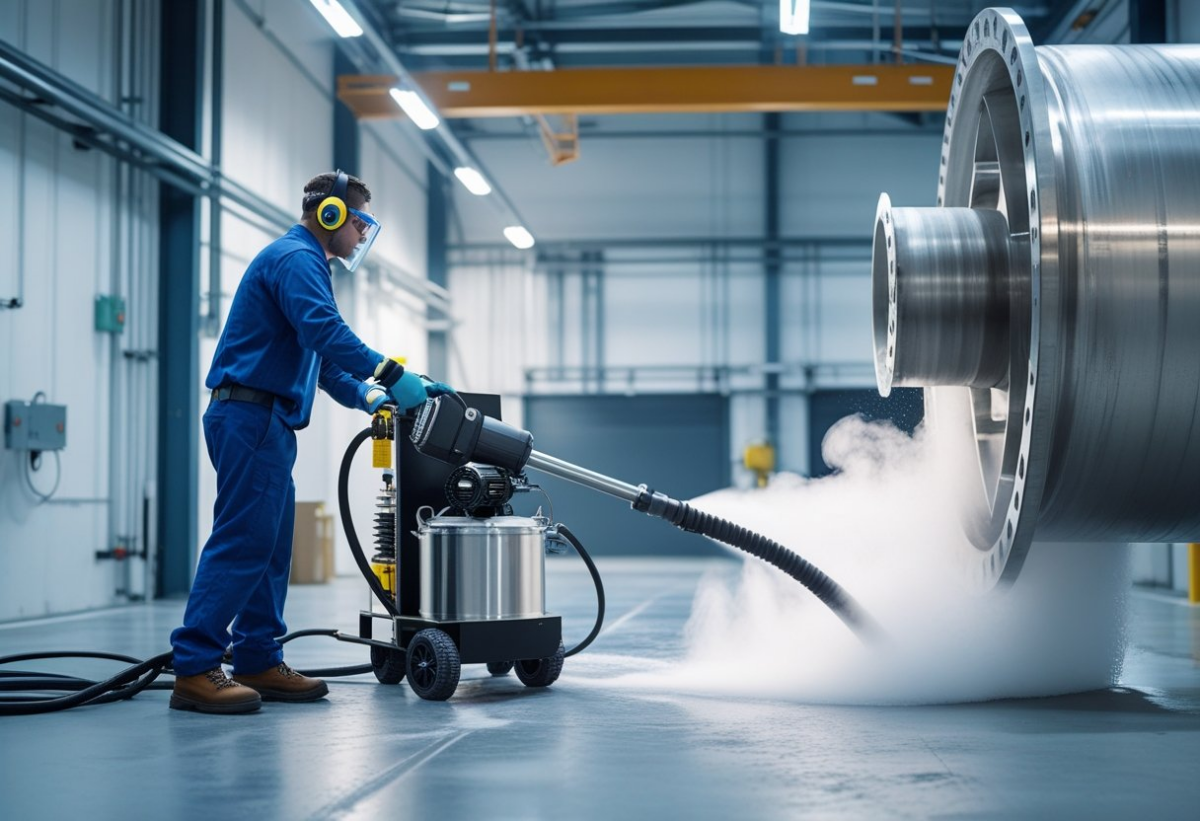

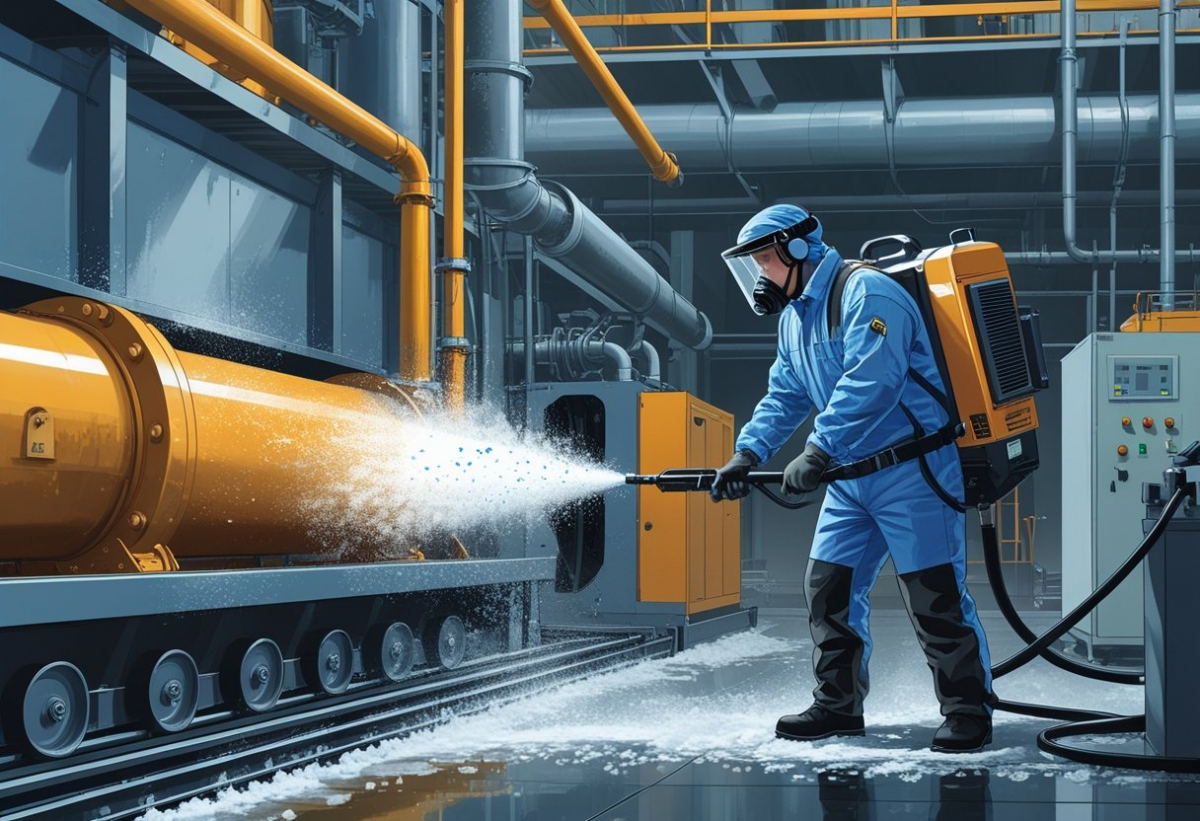
Dry Ice Blasting Safety Tips & Handling Guidelines

Industrial facilities routinely face complex cleaning challenges, from stubborn residue buildup and contamination to costly downtime and the risk of damaging sensitive equipment surfaces. As industries look for more efficient and surface-safe solutions, dry ice blasting safety has become a central consideration when operating advanced systems. Nu-Ice Dry Ice Blasting is an industrial dry ice blasting equipment manufacturer specializing in precision-engineered dry ice machine systems designed for industrial cleaning dry ice applications. Unlike abrasive, wet, or chemical cleaning methods, dry ice blasting uses solid CO₂ pellets to clean surfaces without secondary waste, positioning it as a practical alternative for manufacturers seeking effective and environmentally responsible maintenance solutions.

Dry ice blasting is a non-abrasive cleaning process that uses solid carbon dioxide (CO₂) pellets as the cleaning media. The pellets are accelerated through a blasting system using compressed air and directed at the surface to be cleaned. Upon impact, the dry ice pellets contact the contaminant and then sublimate—transitioning directly from solid to gas without becoming liquid. Because the CO₂ converts into gas, the process does not leave behind secondary waste from the blasting media itself. Only the removed contaminants remain for collection, making the method suitable for industrial environments where cleanliness and minimal residue are priorities.

Kinetic Impact
Compressed air propels dry ice pellets at high velocity toward the target surface. The force of impact helps loosen and dislodge contaminants without significantly affecting the underlying substrate when properly applied.

Thermal Shock
Dry ice pellets are extremely cold. When they contact warmer surfaces, the rapid temperature differential can cause contaminants to contract and weaken their bond to the substrate.

Sublimation Expansion
After impact, the pellets sublimate from solid to gas. This rapid expansion helps lift loosened contaminants away from the surface, contributing to an efficient cleaning process.

A dry ice blasting machine consists of several essential components that work together to deliver controlled cleaning performance. An air compressor supplies the compressed air required to propel the dry ice pellets. The dry ice hopper stores the pellets prior to use, maintaining a steady supply during operation. A metering system regulates the amount of dry ice introduced into the airflow, allowing operators to adjust output based on cleaning requirements. Finally, a hose and nozzle assembly directs the air and pellet stream toward the target surface, enabling controlled application across a range of industrial cleaning tasks.

Nu-Ice Dry Ice Blasting is a U.S.-based manufacturer of dry ice blasting equipment, founded in 1999. The company designs and builds its systems in the United States, supplying equipment for a range of industrial cleaning applications. Its product line includes portable and stationary blasting units engineered for use across manufacturing, food processing, restoration, and other industrial sectors. In the context of industrial cleaning dry ice systems, Nu-Ice focuses on equipment that uses compressed air to propel CO₂ pellets for non-abrasive surface cleaning. The company’s operations center on manufacturing, assembly, and support of dry ice blasting machines intended for controlled, repeatable industrial use.

Nu-Ice dry ice blasters are equipped with a blasting gun designed to deliver a controlled stream of dry ice pellets and compressed air to the target surface. The gun assembly supports interchangeable nozzle options, allowing operators to adjust the spray pattern and flow characteristics based on cleaning requirements.

The systems also incorporate an integrated moisture separator and aftercooler. The moisture separator is designed to reduce water content in the compressed air supply before it enters the blasting unit, while the aftercooler helps lower the temperature of compressed air and remove additional moisture. Together, these components support consistent air quality during operation and help maintain stable blasting performance across industrial environments.

Nu-Ice dry ice blasting systems are manufactured in compact, industrial-grade configurations. Typical units measure approximately 20 inches wide, 30 inches long, and 40 inches high, with a weight of around 185 pounds, depending on configuration. The hopper capacity is approximately 55 pounds of dry ice pellets, allowing for extended operating time between refills.

Operational air flow requirements generally range from approximately 80 to 250 cubic feet per minute (CFM), with recommended pressure ranges between 80 and 250 PSI, depending on the application. Dry ice consumption varies by setting and can range from approximately 1 to 4 pounds per minute. These specifications support use across diverse industrial cleaning environments where controlled air pressure and media flow are required.

Preparation and Setup
Operation begins with positioning the unit in the designated workspace and connecting it to a suitable compressed air supply. Dry ice pellets are loaded into the hopper, and air lines are checked to ensure proper connections. The integrated moisture separation components help prepare the compressed air before blasting begins.

Safety Requirements
Operators should review system guidelines, ensure appropriate ventilation, and verify that compressed air levels fall within recommended ranges. Personal protective equipment and workspace controls are implemented prior to activation.

Typical Workflow Steps
Once powered and pressurized, the operator adjusts the metering system to regulate pellet flow. The blasting gun is directed toward the target surface in controlled passes, maintaining consistent distance and movement until the cleaning cycle is complete.

Nu-Ice dry ice blasting equipment is used across a wide range of industrial and commercial environments. In manufacturing and production facilities, the systems are applied to clean molds, tooling, production lines, and heavy equipment components. The process is also utilized in food processing environments, where equipment such as mixers, conveyors, and packaging machinery require regular sanitation without introducing excess moisture.

In historical restoration and specialty surface preparation, dry ice blasting systems are applied to delicate substrates where controlled cleaning is required. The equipment is also used within automotive and aerospace industries for cleaning parts, engines, and assembly components. Electrical applications include cleaning panels, motors, and industrial systems where dry methods are preferred. Across these sectors, the equipment is integrated into routine maintenance workflows and specialty cleaning operations where compressed air–propelled CO₂ pellet systems are specified.

Dry ice blasting is characterized by the absence of secondary blasting media waste, as the CO₂ pellets sublimate upon impact. The process is considered non-abrasive when properly applied, allowing interaction with a range of industrial surfaces without mechanical grinding or sanding. Because it is a dry and chemical-free method, no liquid runoff or added cleaning agents are introduced into the workspace.

From an operational standpoint, dry ice blasting safety involves managing ventilation, compressed air systems, and pellet handling procedures. Environmental considerations primarily relate to proper air circulation and collection of removed contaminants, while the blasting media itself transitions directly into gas during operation.

Nu-Ice dry ice blasting systems support a range of accessories designed to accommodate different operational requirements. Interchangeable nozzles and hose options allow operators to adjust spray patterns, reach confined areas, and manage airflow characteristics during cleaning. Proper air supply integration is essential, including the use of compatible compressors and, where applicable, aftercoolers to help manage air temperature and moisture levels. Storage considerations include maintaining dry ice in appropriate containers prior to use and ensuring equipment is stored in clean, dry environments. Routine inspection and maintenance of hoses, fittings, and air components support consistent system operation.

What is dry ice blasting?
Dry ice blasting is a cleaning process that uses solid carbon dioxide (CO₂) pellets accelerated by compressed air. The pellets impact contaminants on a surface and then sublimate into gas, leaving only the removed material for collection.

What equipment is required to operate a dry ice blasting system?
Operation requires a dry ice blasting unit, a compatible compressed air supply, dry ice pellets, and appropriate hose and nozzle assemblies. Moisture management components such as separators or aftercoolers may also be integrated.

What safety considerations apply during operation?
Operators should ensure proper ventilation, manage compressed air pressure within recommended ranges, and use appropriate personal protective equipment. Workspace preparation and awareness of CO₂ exposure are important considerations.

What infrastructure is needed in a facility?
Facilities must have access to a sufficient compressed air supply and space for equipment positioning. Proper ventilation is necessary to manage carbon dioxide gas released during the sublimation process.

How does dry ice blasting compare to abrasive methods?
Unlike abrasive cleaning methods that rely on mechanical friction from media such as sand or grit, dry ice blasting uses solid CO₂ pellets that sublimate on impact. The method does not leave secondary blasting media residue.

Is the process environmentally responsible?
The cleaning media converts directly from solid to gas and does not introduce additional chemicals or water into the environment. Only the removed contaminants require disposal according to applicable regulations.

Can the process be used on different types of surfaces?
Dry ice blasting systems are used across manufacturing, food processing, restoration, and specialty industries. The suitability for specific surfaces depends on proper equipment setup and operational parameters.

As industries continue to evaluate cleaning technologies that align with operational efficiency and workplace standards, dry ice blasting systems remain part of the broader conversation around non-abrasive and dry cleaning methods. Nu-Ice Dry Ice Blasting, founded in 1999 and manufacturing equipment in the United States, continues to supply engineered blasting systems designed for industrial applications across multiple sectors. Its equipment integrates compressed air delivery, controlled pellet metering, and moisture management components to support structured cleaning workflows. With ongoing use in manufacturing, food processing, restoration, and specialty industries, dry ice blasting systems represent a practical option within modern maintenance and surface preparation programs. Organizations assessing cleaning infrastructure can consider system configuration, facility requirements, and operator training when integrating this technology into existing operations.

Building Digital Authority: Lessons from the Trelexa Methodology

In the current digital landscape, the volume of content produced daily has reached a point of diminishing returns for most professionals. The “publish more, publish often” mantra has resulted in a sea of mediocrity that fails to move the needle for high-level experts. At Trelexa, we have pivoted away from the quantity-centric model to a precision-engineered approach we call the Trelexa Methodology. This system focuses on the strategic creation and distribution of high-authority content designed to dominate search engine results and solidify an unshakeable online reputation.

Digital authority is not a metric you can buy; it is a cumulative result of technical SEO, psychological positioning, and editorial excellence. When a potential client or partner searches for your name or your specific area of expertise, they are performing a digital audit. If the results are fragmented or superficial, your authority evaporates. The Trelexa Methodology ensures that every digital touchpoint reinforces your status as a primary source of information.

The Foundation: Content as a Strategic Asset

Most professionals treat content as a secondary task—a blog post here, a LinkedIn update there. The Trelexa approach treats content as a long-term financial asset. For an expert’s digital footprint to carry weight, the content must possess “Information Density.” This means providing insights that cannot be generated by a basic search or an AI prompt. It requires the integration of real-world data, proprietary frameworks, and nuanced perspectives that only a domain expert can provide.

High-quality content serves as the backbone of SEO because search algorithms have evolved to prioritize “Expertise, Experience, Authoritativeness, and Trustworthiness” (E-E-A-T). Google’s recent updates are designed to filter out the noise and promote content that demonstrates deep subject matter knowledge. By applying the Trelexa lens to your content, we move beyond simple keywords and focus on “Semantic Search Dominance.” We aim to answer the complex, multi-layered questions your target audience is asking, which naturally aligns with the way modern search engines categorize and rank authority.

The Trelexa SEO Strategy: Beyond Keywords

Standard SEO tactics often focus on “gaming the system”—stuffing keywords into headers and building low-quality backlinks. These methods are fragile and often lead to penalties when algorithms shift. The Trelexa Methodology utilizes a “Pillar and Cluster” architecture that creates a self-sustaining ecosystem of authority.

  1. The Authority Pillar: This is a comprehensive, deep-dive asset—often a book or a massive white paper—that covers a broad topic within your domain. This serves as the “source of truth” for your brand.
  2. The Contextual Clusters: We then break down this pillar into dozens of smaller, highly specific pieces of content. Each piece targets a “long-tail” search query and links back to the main pillar.

This structure tells search engines that you are not just writing about a topic; you are an architect of that topic. It creates a web of internal links that keeps users on your platforms longer, decreasing bounce rates and signaling to Google that your site is a high-value destination. 

At Trelexa, we emphasize the importance of “Search Intent.” We don’t just want traffic; we want the right traffic. By aligning your content with the specific intent of a high-value prospect—whether they are in the discovery phase or the decision-making phase—we ensure that your digital authority translates into tangible business outcomes.

Reputation Management through Editorial Control

Your online reputation is the sum of what others say about you and what you say about yourself. In the absence of a proactive strategy, the internet will define you by default. The Trelexa Methodology takes control of the narrative through rigorous editorial standards.

Quality is the best form of reputation management. When an expert publishes a poorly researched article or a generic listicle, they are actively damaging their brand. We advocate for a “Zero-Waste” content policy. Every word must serve a purpose. This means:

  • Eliminating Jargon: True authority is the ability to explain complex concepts simply. Jargon is often a mask for a lack of depth.
  • Evidence-Based Assertions: Every claim made in a Trelexa-backed piece of content is supported by data, case studies, or logical frameworks.
  • Visual Authority: High-quality content isn’t just text. It includes proprietary diagrams, charts, and infographics that are frequently cited by others in the industry, creating a natural backlink profile.

By consistently delivering this level of quality, you become a “Cited Authority.” When other websites and influencers link to your content as a reference point, your online reputation reaches a level of stability that is immune to the whims of social media trends.

The Role of External Validation

While your own platforms are the headquarters of your authority, your digital footprint must extend to third-party sites. This is why guest posting and collaborative publishing are central to the Trelexa approach. When your insights appear on high-authority industry journals or news outlets, you are essentially “borrowing” their established trust.

However, the Trelexa Methodology differs from standard PR. We don’t just aim for “mentions”; we aim for “thought leadership features.” A mention in an article is fleeting. A feature where you provide the primary analysis of a market trend is permanent. This external validation acts as a powerful signal to both human readers and search engine crawlers that your expertise is recognized by the wider community.

Leveraging the Multi-Channel Authority Loop

Digital authority is not limited to text. The Trelexa framework encourages experts to repurpose high-density content across multiple formats. A chapter from your book becomes a keynote script; that script becomes a series of high-production videos; those videos are distilled into insightful social media threads.

This creates an “Omnipresence Effect.” A prospect might see your video on LinkedIn, read your deep-dive article on a major industry site, and then find your book on Amazon. By the time they reach your website, the sale is already 80% complete. They aren’t questioning your expertise; they are looking for a way to work with you. This is the ultimate goal of the Trelexa Methodology: to move you from a position of “pursuing” clients to a position of “attracting” them.

The Trelexa Vision: Leading by Example

We practice exactly what we preach. The effectiveness of this methodology is proven through our own projects and the success of the experts we represent. We are thrilled to announce that our inaugural Trelexa book anthology, featuring five world-class domain experts, will be out soon! This project is a masterclass in digital authority, combining search-optimized content with the collective reputation of five industry leaders.

The launch of this anthology will demonstrate how the Trelexa Methodology can dominate a market segment by aligning high-quality editorial work with advanced digital distribution strategies. It is a high-authority digital asset that will serve as a cornerstone for these authors’ reputations for years to come.

Scaling Your Authority with Trelexa

If you are a domain expert who is tired of shouting into the void of social media with little to show for it, it is time for a more clinical approach to your digital presence. We are currently accepting new authors who want to build their authority online with our comprehensive author services.

Building a digital fortress requires a blueprint. At Trelexa, we provide the technical expertise and editorial oversight needed to turn your knowledge into a dominant online force. We can help you:

  • Become a Bestseller on Amazon: We utilize the Trelexa Methodology to ensure your book ranks for the high-volume keywords that matter in your industry.
  • Skyrocket Your Online Visibility: Our distribution network ensures your content appears where your target audience is already looking.
  • Command Your Industry Narrative: We help you create the high-density content that defines the conversation in your field.

Don’t let your expertise be buried under the noise of the internet. Let Trelexa help you build a digital reputation that reflects your true value. The transition from expert to authority starts with the first piece of strategic content. Let’s build it together.

How Grand Rapids Businesses Can Boost Conversions with Better UX (Part 2)

In Part 1, we covered foundational UX elements such as site speed, mobile responsiveness, and intuitive navigation. Now in Part 2, we dive deeper into the advanced strategies that help Grand Rapids businesses turn website visitors into qualified leads and paying customers.

In competitive West Michigan markets, a visually appealing website is not enough. To truly grow revenue, companies must prioritize conversion-driven web design

 that aligns user behavior with business goals.

Optimize Calls to Action for Local Intent

Your call to action is the bridge between interest and conversion. If it is unclear, hidden, or generic, potential customers will leave without taking the next step.

For businesses in Grand Rapids, calls to action should reflect local buying intent. Instead of vague phrases like “Learn More,” consider stronger options such as:

Schedule Your Free Grand Rapids Consultation

Get a Quote Today

Book Your Service in West Michigan

Talk to a Local Specialist

Clear, location relevant CTAs increase trust and urgency. They also reinforce that your business serves the local community, which is especially important for service based industries.

Simplify Contact Forms

Long, complicated forms reduce conversions. While it may seem helpful to collect as much information as possible, excessive required fields often discourage submissions.

High converting forms typically:

Ask only for essential information

Use clear labels

Display error messages instantly

Work seamlessly on mobile devices

For Grand Rapids businesses competing in industries like legal services, home improvement, or healthcare, making it easy to request information can dramatically improve lead volume.

Reducing friction is one of the most overlooked yet powerful UX improvements.

Use Social Proof Strategically

Consumers trust other consumers. Testimonials, reviews, and case studies provide reassurance and reduce hesitation.

Instead of placing reviews on a separate page that few visitors see, integrate them near key decision points. For example:

Add testimonials beside contact forms

Include star ratings near service descriptions

Highlight local client success stories

Featuring recognizable neighborhoods like Eastown, Heritage Hill, or Ada can make testimonials even more relatable for Grand Rapids audiences.

When users see proof that others in their community trust your business, they are more likely to convert.

Improve Visual Hierarchy

Visual hierarchy guides users through your website in a logical and persuasive way. Without it, visitors feel overwhelmed or confused.

Effective visual hierarchy includes:

Clear headline structure

Strategic use of white space

Contrasting call to action buttons

Readable font sizes

Consistent branding

Your most important message should always stand out first. Secondary information should support it without competing for attention.

Businesses that invest in professional UX design often see immediate improvements in engagement and lead generation simply by restructuring layout priorities.

Leverage Heatmaps and Analytics

Guesswork has no place in modern UX strategy. Tools like heatmaps and user behavior analytics reveal how visitors interact with your site.

You can identify:

Where users click most often

Where they stop scrolling

Which pages cause drop offs

Which elements are ignored

For Grand Rapids companies investing in digital marketing, analyzing this data allows for continuous improvement. Even small changes, such as moving a button higher on the page, can significantly impact conversion rates.

Data driven optimization separates average websites from high performing revenue engines.

Prioritize Page Speed for Local Searches

Although we discussed speed in Part 1, its importance cannot be overstated. Slow loading pages increase bounce rates and reduce conversions.

Local users searching for immediate solutions, such as “roof repair Grand Rapids” or “emergency HVAC service near me,” expect instant results. A delay of just a few seconds can send them to a competitor.

Optimizing image sizes, minimizing unnecessary scripts, and using reliable hosting are critical steps in maintaining fast performance.

Speed directly influences both user experience and search engine rankings.

Create Clear Service Pages

Many businesses lose conversions because their service pages are vague or cluttered.

Each core service should have its own dedicated page that includes:

A clear explanation of the service

Benefits for the customer

Frequently asked questions

Strong call to action

Local relevance

For example, instead of grouping all services into one general page, a home services company in Grand Rapids should create separate pages for plumbing, electrical, and remodeling.

This clarity improves both SEO and user experience.

Build Trust with Transparency

Trust signals are essential for conversion optimization. Include:

Local business address and phone number

Certifications and affiliations

Secure payment indicators

Clear privacy policies

When visitors feel safe and informed, they are more likely to take action.

Transparency reduces hesitation and builds credibility within the Grand Rapids community.

Frequently Asked Questions

What is UX in web design?

UX stands for user experience. It refers to how visitors interact with and navigate your website, including usability, accessibility, and overall satisfaction.

How does UX impact conversions?

Good UX removes friction, builds trust, and guides users toward clear actions, increasing the likelihood they will complete a form, make a purchase, or contact your business.

Why is local relevance important for Grand Rapids businesses?

Local references build trust and show that your business understands the community, making users more comfortable choosing your services.

How often should I update my website’s UX?

Websites should be reviewed at least annually, with ongoing monitoring of analytics to identify areas for improvement.

Can small UX changes really increase conversions?

Yes. Even minor improvements, such as clearer calls to action or shorter forms, can significantly improve conversion rates over time.

Conclusion

Grand Rapids businesses that want to compete in today’s digital landscape must move beyond aesthetics and focus on performance. Better UX is not just about making a website look good. It is about making it work effectively for both users and business goals. By optimizing calls to action, simplifying forms, leveraging social proof, and using data to guide improvements, companies can turn more visitors into loyal customers. Investing in strategic UX enhancements is one of the most powerful steps toward sustainable online growth in West Michigan.

Surface Prep for Automotive Parts & Restoration

Automotive manufacturing and restoration environments often face persistent challenges such as paint residue buildup, corrosion, and sensitive component cleaning—all while minimizing downtime and surface damage. dry ice blasting automotive applications have emerged as a practical alternative for addressing these issues without abrasion. Nu-Ice™ Dry Ice Blasting is an industrial dry ice blasting equipment manufacturer specializing in dry ice cleaning systems designed for precision surface preparation. By using solid CO₂ pellets that sublimate on contact, dry ice blasting offers measurable dry ice blasting benefits compared to abrasive, wet, or chemical methods, supporting efficient paint removal, rust cleaning, and safe part cleaning without secondary waste.

Dry ice blasting is an industrial cleaning method that uses solid carbon dioxide (CO₂) pellets propelled by compressed air to remove surface contaminants. As explained by Nu-Ice Dry Ice Blasting, the process relies on dry ice pellets striking the surface and immediately sublimating—changing directly from a solid into a gas. This phase change allows coatings, residues, and corrosion to be lifted away without introducing water, chemicals, or abrasive media. Because the dry ice dissipates on contact, there is no secondary waste stream beyond the removed material itself.

Kinetic Impact
Dry ice pellets are accelerated through compressed air, creating enough kinetic energy on impact to loosen surface contaminants without grinding or abrasion.

Thermal Shock
The extreme cold of dry ice creates a rapid temperature differential between the contaminant and the substrate. This thermal shock weakens the bond holding paint, grease, or rust to the surface.

Sublimation Expansion
Upon impact, the pellets sublimate and expand into gas. This rapid expansion helps lift and separate contaminants from the underlying material. According to Nu-Ice™ Dry Ice Blasting, these combined principles enable effective cleaning while preserving sensitive automotive parts and tooling.

A dry ice blasting machine consists of several essential components working together. An air compressor supplies the compressed air needed to propel pellets through the system. The dry ice hopper stores and feeds solid CO₂ pellets into the machine. A metering system controls pellet flow to ensure consistent and adjustable cleaning output. Finally, a hose and nozzle direct the air-and-pellet stream onto the target surface. As described on the Nu-Ice™ Dry Ice Blasting website, these components are designed to work in unison to deliver controlled, non-abrasive cleaning across industrial and automotive applications.

Nu-Ice Age, Inc. is the veteran-owned manufacturer behind Nu-Ice Dry Ice Blasting™ equipment, known for industrial dry ice cleaning solutions engineered and assembled in the USA. Founded in 2007 and based in Jackson, Michigan, the company designs a range of dry ice blasting automotive and industrial cleaning machines that use solid CO₂ pellets to address production residue, paints, oils, and other stubborn surface contaminants across diverse industries. All Commando® dry ice blasting systems and accessories are proudly made in the USA, reflecting the company’s commitment to quality craftsmanship and reliable performance in surface preparation and restoration applications. 

Nu-Ice Dry Ice Blasters are equipped with a robust blasting gun designed for ergonomic handling during extended use. The gun accommodates interchangeable nozzle options, including round and fan nozzles, which allow operators to tailor the blast pattern to specific cleaning tasks. The inclusion of an integrated moisture separator helps remove water vapor from the compressed air supply before it enters the dry ice blaster, ensuring more consistent blasting performance. An aftercooler further conditions the incoming air by removing heat and moisture, which reduces the potential for freezing issues within the system. These features work together to support reliable, uninterrupted cleaning operations on automotive parts, machinery, and other surfaces where precision and control are critical. Nu-Ice’s design focus on modular components also facilitates ease of maintenance and adaptability to different industrial applications. 

The COMMANDO® 55 Dry Ice Blaster is a heavy-duty dry ice blasting machine designed for demanding cleaning applications. Its overall dimensions measure approximately 33.25″ in length, 23″ in width, and 39″ in height, with a total weight of about 234 pounds. The hopper capacity holds up to 55 pounds (25 kg) of dry ice pellets, supporting extended blasting periods between reloads. The unit operates across an air flow range of roughly 85–375 CFM and functions at a pressure range of approximately 60–250 psi, offering flexibility for various surface types and cleaning intensities. Dry ice consumption spans up to 425 pounds per hour, depending on settings and task requirements. The system also includes an integrated moisture separator and supports adjustable blast pressure and pellet feed rate, with a standard 1″ compressed air connection fitting to interface with typical industrial air supplies. 

Preparation and Setup
The dry ice blasting process with Nu-Ice equipment begins by connecting the unit to a compatible compressed air supply and loading dry ice pellets into the insulated hopper. Operators then select the appropriate hose and nozzle configuration based on the cleaning task.

Safety Requirements
Nu-Ice Age, Inc. outlines standard safety practices, including the use of personal protective equipment such as gloves, eye protection, and hearing protection, along with proper ventilation to manage CO₂ gas release.

Typical Workflow Steps
Once powered, the operator adjusts air pressure and pellet feed using the machine’s controls. The blasting gun is directed at the target surface in controlled passes, with pellets delivered until contaminants are dislodged. After blasting, only the removed material remains for collection, as the dry ice sublimates on contact.

Nu-Ice™ Dry Ice Blasting equipment is used across a wide range of industrial and commercial environments where non-abrasive cleaning is required. In manufacturing and production facilities, systems are applied to clean molds, tooling, conveyors, and production equipment without disassembly. In food processing and sanitation settings, dry ice blasting is used on ovens, mixers, and packaging equipment where moisture and chemical residues are undesirable.

The technology is also utilized in historical restoration and conservation projects involving delicate surfaces such as wood, stone, and masonry, where preservation of the underlying material is critical. Automotive applications include cleaning engines, molds, fixtures, and restoration components. In aerospace and electrical environments, Nu-Ice systems are applied to remove coatings, sealants, and contaminants from sensitive assemblies and wiring. Specialty cleaning applications further include printing presses, foundries, power generation equipment, and rubber processing operations, reflecting the versatility of dry ice blasting across industries.

Dry ice blasting offers several operational characteristics that distinguish it from traditional cleaning methods. Because dry ice sublimates on impact, the process produces no secondary waste, leaving only the removed contaminant to be collected. The non-abrasive interaction allows cleaning of sensitive substrates without surface wear, while the dry, chemical-free process avoids introducing moisture or solvents into the work area. Environmental considerations include proper ventilation to manage carbon dioxide gas and appropriate handling of dry ice pellets during storage and loading. When evaluating dry ice blasting benefits, Nu-Ice Age, Inc. emphasizes correct equipment setup, air supply quality, and adherence to safety guidelines to ensure consistent and controlled operation across applications.

Nu-Ice Age, Inc. offers a range of accessories designed to support flexible system integration for dry ice blasting operations. Available nozzle options include round and fan-style designs that attach to compatible blasting guns, allowing different spray patterns and access angles. Hose assemblies are sized to maintain consistent pellet flow from the machine to the nozzle. Proper air supply integration is supported through the use of external compressors, with optional aftercoolers and moisture separators recommended to condition incoming air. Storage and maintenance considerations include keeping hoses dry, routinely inspecting seals and fittings, and storing machines in clean, temperature-controlled environments when not in use.

What is dry ice blasting?
Dry ice blasting is a cleaning process that uses solid carbon dioxide pellets accelerated by compressed air. The pellets impact the surface, sublimate into gas, and help remove contaminants without introducing water, chemicals, or abrasive media.

Is Nu-Ice equipment compatible with standard air compressors?
Yes. Nu-Ice dry ice blasting machines are designed to operate with industrial compressed air supplies that meet specified pressure and airflow requirements, allowing integration with many existing compressor systems used in manufacturing and maintenance environments.

What safety considerations are involved?
Safety practices include wearing eye, hand, and hearing protection, ensuring proper ventilation, and handling dry ice with insulated gloves. Carbon dioxide gas must be allowed to dissipate safely in enclosed or confined spaces.

What infrastructure is required to operate a system?
Typical requirements include a compatible air compressor, electrical power where applicable, dry ice pellet supply, and adequate workspace ventilation. Optional accessories such as aftercoolers may be added based on air quality conditions.

How does dry ice blasting compare to abrasive cleaning methods?
Dry ice blasting differs from abrasive methods in that it does not rely on grinding media. It removes contaminants through impact, temperature change, and sublimation rather than surface abrasion.

What is the environmental impact of dry ice blasting?
Dry ice is made from reclaimed carbon dioxide, and the blasting process produces no secondary waste. Only the removed contaminant remains for disposal, reducing cleanup complexity compared to many traditional methods.

Together, these elements illustrate how dry ice blasting functions as a controlled, non-abrasive surface preparation method for automotive parts and restoration work. By combining solid CO₂ pellets, compressed air, and purpose-built equipment, the process supports paint removal, rust cleaning, and sensitive component maintenance without introducing moisture or chemical residues. Through its U.S.-manufactured equipment and system design, Nu-Ice Age, Inc. provides industrial dry ice blasting solutions that align with modern operational, safety, and environmental considerations across automotive and industrial cleaning applications.